

If you want Santa Fe to feel a little more connected, contemporary, and easy to explore on foot, the Railyard stands out fast. This is one of the city’s clearest examples of a place where art, transit, open space, and everyday errands come together in one district. If you are wondering what it is really like to live there, this guide will walk you through the lifestyle, housing options, and practical tradeoffs so you can decide whether the fit feels right. Let’s dive in.
Why the Railyard Feels Different
The Santa Fe Railyard is not an accidental collection of shops and galleries. It is a roughly 50-acre mixed-use redevelopment of former industrial rail land, shaped over time into a transportation center, economic hub, and focal point for arts and culture, according to Rio Metro’s Santa Fe Depot overview.
That long-term vision matters because it helps explain why the district feels layered instead of manufactured. The Santa Fe Railyard Community Corporation’s history shows that public input helped guide the plan, with residents calling for open space, railroad continuity, local business opportunities, and arts and cultural uses.
Today, that planning shows up in daily life. The district includes galleries, studios, museums, community organizations, retail and restaurant space, a cinema, a year-round farmers market pavilion, and more than 13 acres of open space, based on Railyard Santa Fe’s district overview.
Walkable Days Start Here
One of the biggest reasons people are drawn to the Railyard is simple: you can do more without getting in the car. The Santa Fe Railyard Arts District notes that the area sits about seven blocks southwest of the downtown plaza, and several major contemporary art destinations are within walking distance of one another.
That creates a rhythm that feels different from more spread-out parts of Santa Fe. You can walk to galleries, stop by a museum, meet a friend for coffee, spend time in the park, and head to the market without planning your whole day around parking.
For many buyers, that convenience is not just a perk. It is a lifestyle choice that supports a more flexible, low-car routine in a city where that is not always easy to find.
Arts and Culture Are Part of Daily Life
The Railyard is one of Santa Fe’s most active arts-centered districts. The Railyard Arts District site highlights nearby contemporary galleries, SITE Santa Fe, and the New Mexico Museum of Art Vladem Contemporary, all within the same walkable area.
The district also hosts recurring events that help the neighborhood feel active beyond business hours. That includes programming like the Last Friday Art Walk and free museum days, which can make the area feel like an ongoing cultural destination rather than a place you visit once in a while.
If you enjoy being close to creative spaces and public programming, that energy is a major part of the appeal. It gives the Railyard a lived-in feel that is hard to replicate in more purely residential areas.
Food and Market Access Add Convenience
The Railyard also works well for everyday routines because food and gathering spaces are built into the district. Tourism Santa Fe describes the area as a hub for entertainment, shopping, food, and events, with artisans, movie nights, and the farmers market all part of its rhythm.
The Santa Fe Farmers’ Market Institute says the market takes place in the Market Pavilion on Tuesday and Saturday mornings in the Railyard District. That kind of built-in access can make weekly routines feel more social and more connected to the city.
For some buyers, this is one of the strongest selling points. You are not just near destinations. You are near places that can become part of your normal week.
Park Space Balances the Urban Feel
Urban energy is part of the Railyard’s appeal, but so is the open space. The City of Santa Fe says the 13-acre Railyard Park and Plaza is managed by the Santa Fe Railyard Community Corporation, with support from the city and the Railyard Park Conservancy.
According to Tourism Santa Fe, the park includes 28 gardens, public art, a children’s play area, and free events year-round. That gives the district breathing room and helps balance the built environment with places to pause, walk, or simply spend time outdoors.
This is one reason the Railyard can appeal to buyers who want a more urban setting without giving up access to open air and public gathering space. The park is not an afterthought. It is part of how the district functions.
Transit Access Is a Real Advantage
If regional connectivity matters to you, the Railyard has one of Santa Fe’s strongest transit advantages. Rio Metro notes that the Santa Fe Depot is the Rail Runner’s northern terminus and sits steps from the Railyard.
That means you have direct access to commuter rail service connecting Santa Fe, Albuquerque, and Belen. Tourism Santa Fe says the Rail Runner operates seven days a week, which gives the district a practical connection that is hard to match elsewhere in the city.
The City of Santa Fe’s transit system also adds flexibility. The Santa Fe Depot page explains that Santa Fe Trails and Santa Fe Pick-Up are part of local trip planning, with bus service running daily from 7:00 a.m. to 8:00 p.m., and Rail Runner passengers can ride Santa Fe Trails for free.
Trails Support Car-Light Living
The Railyard is not just connected by rail and bus. It also ties into trails that support walking and biking. The Railyard Arts District notes that the area is designed to be walkable, while planning for the district includes a pedestrian and cyclist trail along the acequia.
The Santa Fe Conservation Trust describes the Rail Trail as a paved, multi-use commuter route from the Railyard to Rabbit Road, and Tourism Santa Fe says the Acequia Trail links the Baca area to the North Railyard for hikers and cyclists.
So, can you live car-light here? For many people, yes. Between rail access, local transit, walkable amenities, and trail connections, the Railyard supports a more flexible transportation routine than many Santa Fe locations.
What Housing Looks Like in the Railyard
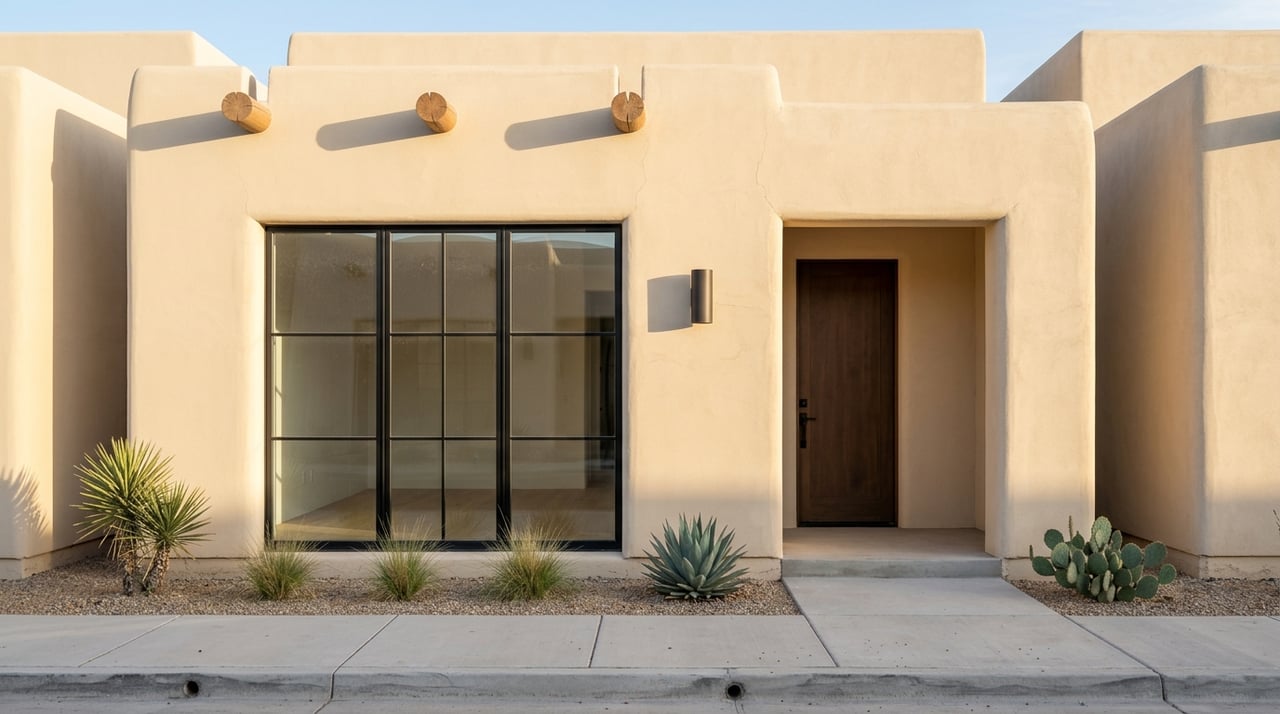
The housing mix in the Railyard is a key part of its identity. This is not a conventional subdivision with rows of single-family homes. Current district materials describe live/work lofts and apartments, while the area’s redevelopment history includes residential condominiums, live/work spaces, and the 58-unit Railyard Flats rental apartment building, according to Railyard Santa Fe and the SFRCC history page.
That points to a housing profile that is more urban and mixed-use in character. You are more likely to find lofts, apartments, condos, and live/work options than a traditional neighborhood pattern.
For buyers who value design, flexibility, and proximity to activity, that can be a strong match. For buyers who want a quieter, more separated residential setting, it may feel less aligned with what they have in mind.
Who the Area Often Fits Best
The Railyard tends to appeal to people who want their location to shape their daily routine. That can include creative professionals, remote workers, second-home buyers who want easy access to culture and events, and anyone drawn to a more walkable Santa Fe experience.
It can also make sense if you want to be near galleries, the market, transit, and public gathering spaces without feeling cut off from the rest of the city. The district’s live/work pattern also supports people who value flexible space and a more integrated urban environment.
In short, the Railyard is often less about square footage alone and more about how you want to live. The lifestyle is the product here as much as the property itself.
The Main Tradeoff: Noise and Activity
Every strong location comes with tradeoffs, and in the Railyard, the biggest one is sound. This is an active district with trains, events, pedestrians, restaurants, and public programming. It offers energy and convenience, but it is not a quiet suburban environment.
Rio Metro’s safety guidance says trains do not routinely sound horns in quiet zones, though engineers may still use them in emergencies. That helps reduce some of the expected rail noise, but it does not make the area silent.
A 2024 City of Santa Fe memo referenced through rail operations reporting also notes that rail activity can create periods with gate arms down, along with noise and fumes from an idling diesel locomotive in certain situations. The practical takeaway is straightforward: the Railyard offers an urban, intermittent soundscape.
For many residents, that tradeoff is worth it because of the walkability and access. Still, it is smart to think honestly about your tolerance for activity before focusing your search here.
Why Buyers Keep Coming Back to the Railyard
The Railyard works because it combines several things that are often scattered across different parts of Santa Fe. You get arts access, open space, transit, food, events, and a more compact daily footprint in one district.
That blend gives the area a contemporary edge while staying rooted in Santa Fe’s planning history and public life. The Railyard master plan vision frames the district as a compact urban place where transportation, culture, and community uses come together, and that description still feels accurate today.
If you are searching for a Santa Fe property that supports walkable routines and a design-conscious, arts-connected lifestyle, the Railyard is worth a closer look. And if you want help evaluating whether a loft, condo, or live/work property in this part of town fits your goals, Ayden Gramm Real Estate can help you think through both the lifestyle and the real estate side with clarity.
FAQs
What is daily life like in Santa Fe’s Railyard district?
- Daily life in the Railyard often includes walkable access to galleries, museums, the farmers market, restaurants, park space, and transit, all within a compact mixed-use district.
What types of homes are common in the Santa Fe Railyard?
- Housing in the Railyard is typically more urban in style, with lofts, apartments, condos, and live/work spaces rather than a conventional single-family subdivision pattern.
Is the Santa Fe Railyard a walkable area?
- Yes, the Railyard is one of Santa Fe’s more walkable districts, with arts venues, market space, trails, and transit connections located close together.
Is the Santa Fe Railyard quiet or busy?
- The Railyard is generally busier than quieter residential areas, with intermittent sound from trains, events, and daily district activity, even though quiet zones reduce routine horn use.
Can you live without a car in the Santa Fe Railyard?
- Many residents can live car-light in the Railyard because of Rail Runner access, local bus service, walkable amenities, and nearby trail connections.