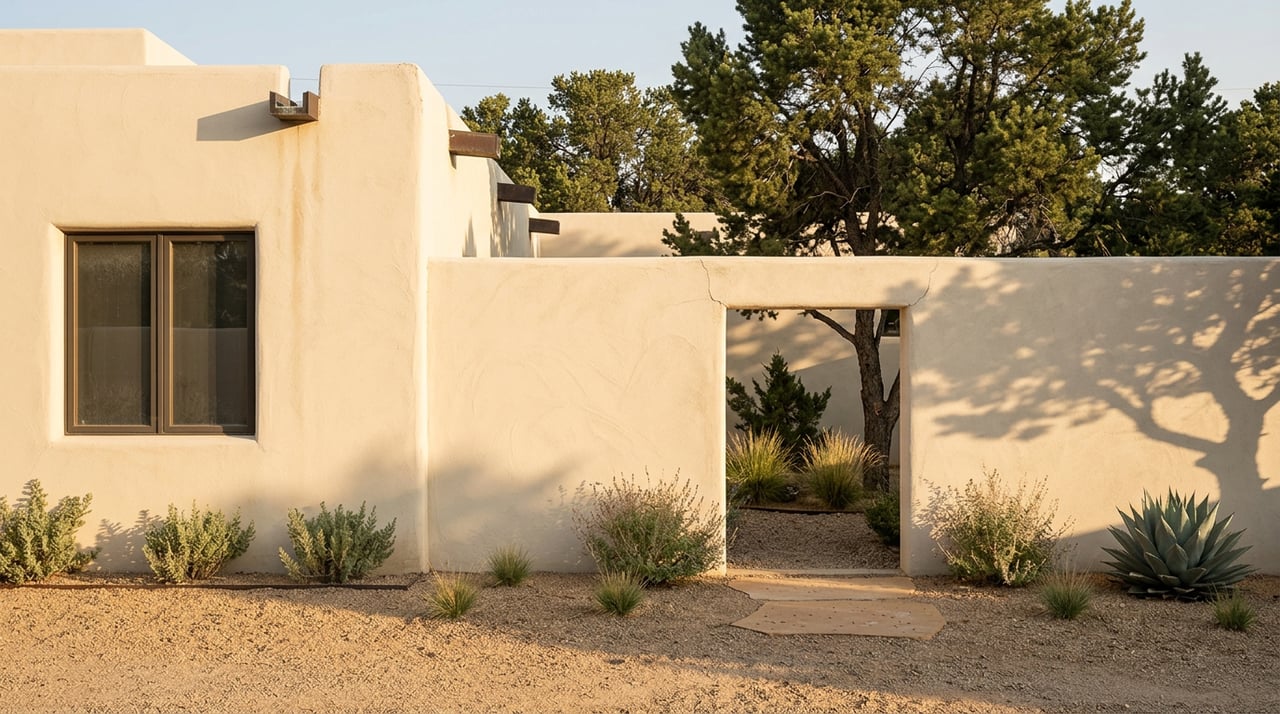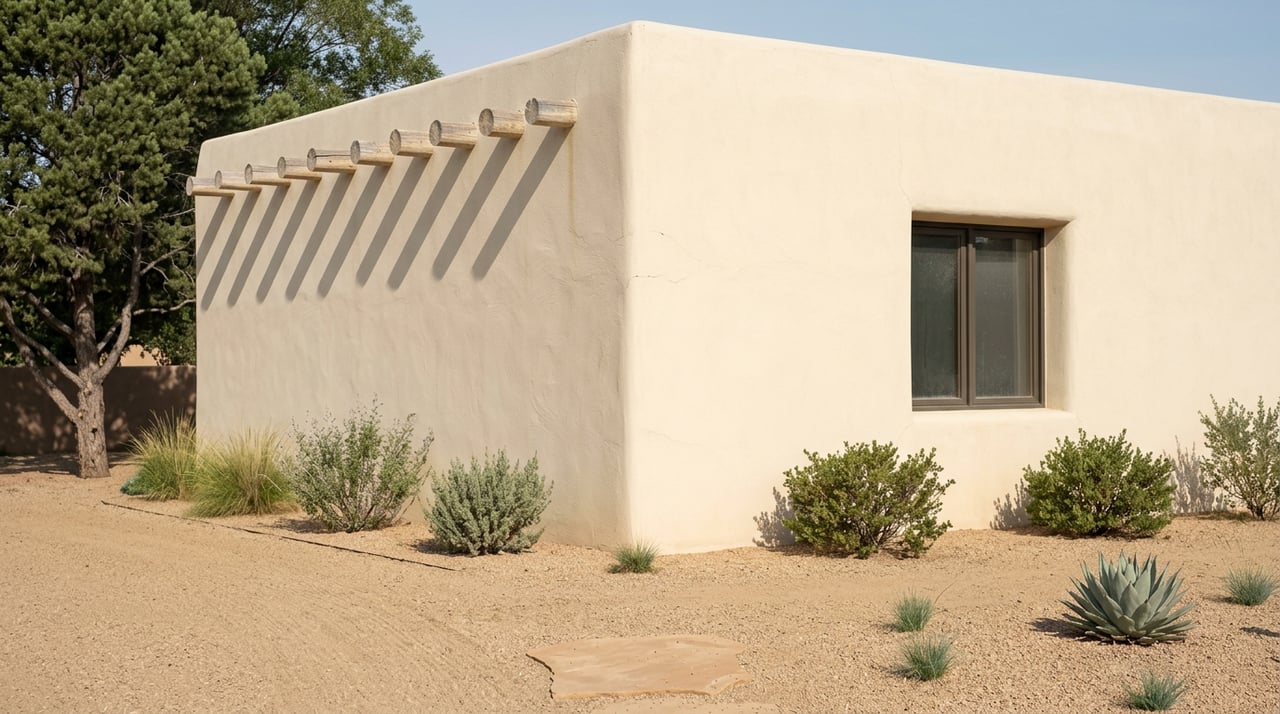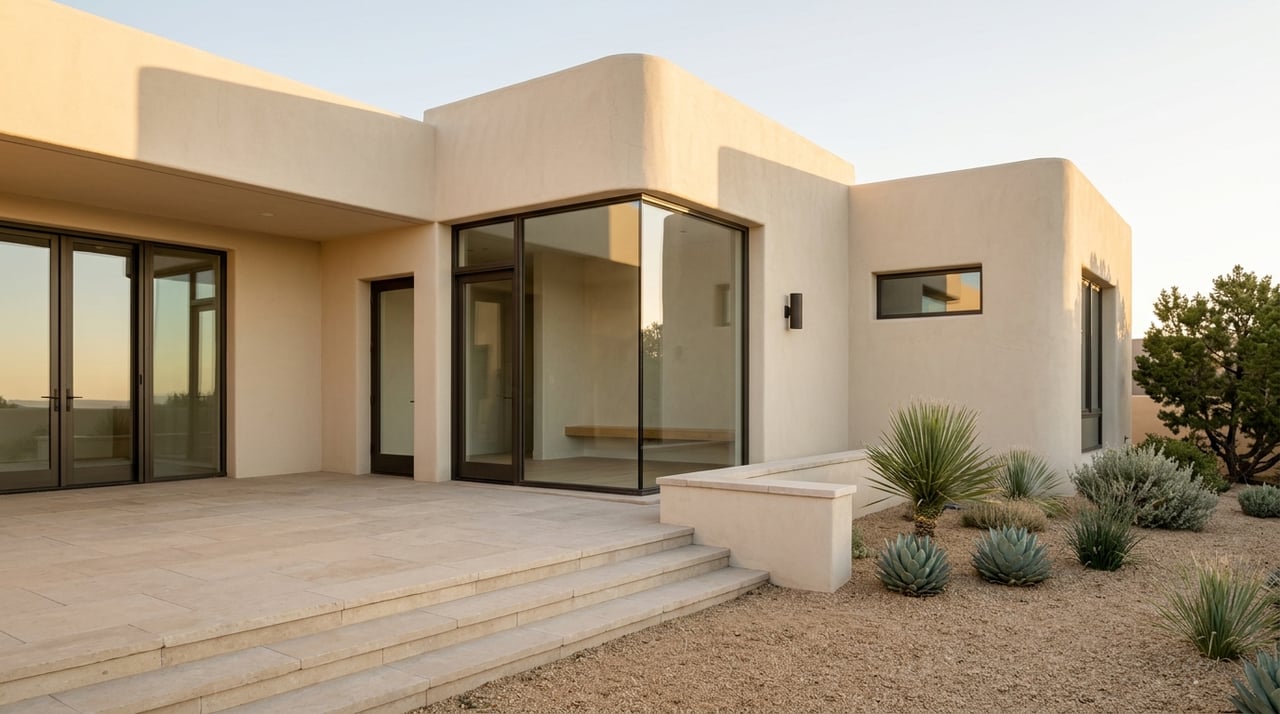


Most buyers walk into a Canyon Road showing already braced for the obvious risks. They know to check the roof. They know adobe and water don't mix. What catches people off guard on the Eastside isn't the home inspection at all. It's the paper trail behind the house, the one that decides whether the charming detached studio in back is a legal asset or a legal problem, and whether the wall you're standing next to can ever be moved.
That paper trail rarely shows up on a walkthrough. It shows up three weeks into a transaction, usually after an offer is already in, when someone asks the city for a property's historic status and gets an answer nobody budgeted for.
The Question That Matters More Than The Roof
Every property inside Santa Fe's five historic districts carries a classification: contributing, significant, landmark, or non-contributing. That single word, buried in a city file rather than a listing description, sets the ceiling on what a new owner can change. A landmark structure is held to the tightest standard. A non-contributing one, often a mid-century infill or a heavily rebuilt shell, has more room to move. The catch is that the classification isn't always intuitive from the curb. A house can look centuries old and carry a non-contributing status because a prior renovation erased too much of the original footprint to qualify for stronger protection, or it can look modest and still be locked down as significant because of what survives behind the plaster.
The City of Santa Fe's Historic Preservation Division administers this system, and it draws a hard line most buyers don't expect: any exterior change subject to public view from a street, walkway, or public place has to go through staff or the Historic Districts Review Board before a permit is issued. Paint color, window replacement, a new gate, a re-stuccoed wall facing the street. All of it.
What The Review Board Actually Looks At
The Historic Districts Review Board meets the second and fourth Tuesday of most months, and its agenda tells you more about what you're buying into than any listing photo. A June 2024 hearing walked a brand-new 3,200-square-foot house on Canyon Road through the same scrutiny as a two-hundred-year-old adobe, capping a detached studio at 14 feet 10 inches and specifying, item by item, how many pergolas the site plan was allowed to include. The same meeting reviewed a remodel on Acequia Madre that needed sign-off just to raise a roofline to 13 feet, add a coyote fence, and swap out windows and doors on a home already classified as contributing.
That level of detail is the norm, not the exception. And it isn't uniform across the neighborhood. The city runs five separate historic districts with different rules attached. In the historic review district that climbs Camino Militar and Apodaca Hill and reaches up the higher stretches of Old Santa Fe Trail and Old Pecos Trail, the ordinance requires planning and land use approval before a permit is issued for construction, renovation, or exterior remodeling, but demolition itself is specifically excluded from that same approval step. Inside the core Downtown and Eastside Historic District that covers Canyon Road proper, it works differently. The Review Board's own case history includes full public hearings on demolition requests, including a March 2024 hearing that weighed whether four longstanding homes on a single block could come down before there was even a design plan for what would replace them.
The practical takeaway: knowing your property sits in "the Historic Eastside" isn't specific enough. Which of the five districts, and which sub-authority within it, changes what you can and can't do the day after closing.
Single Adobe, Double Adobe, And The Detail Nobody Puts In The Listing
Ask a listing agent whether a house is "true adobe" and you'll usually get a confident yes. Ask whether it's single adobe or double adobe and the answer gets a lot less certain, which is exactly the problem, because the difference shapes both how the house feels and what it's worth.
| Single adobe | Double adobe | |
|---|---|---|
| Finished wall thickness | Roughly 12 to 14 inches | Roughly 24 to 30 inches or more |
| Construction | One course of adobe brick | Two full courses laid side by side |
| Feel | Solid, thermally stable | Noticeably heavier underfoot, deeper window wells, quieter interior |
| Where you find it | Common throughout the historic core | Rarer, often the oldest sections of a house |
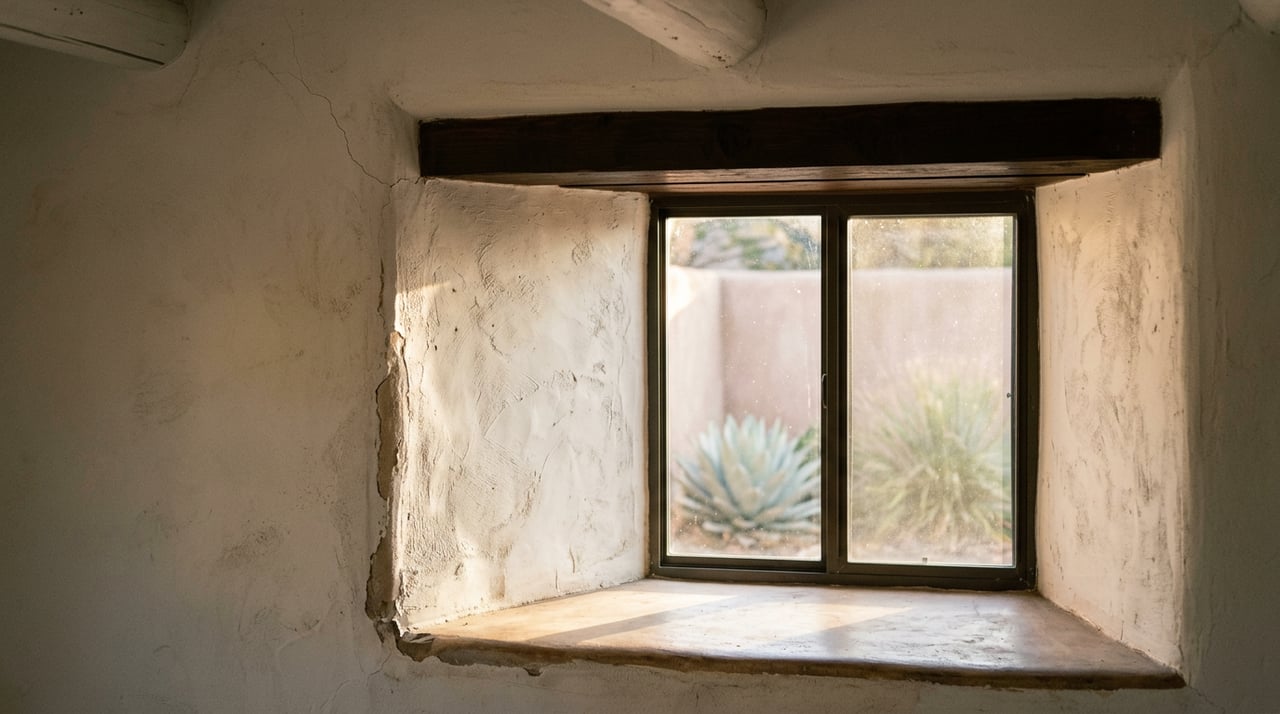
This isn't a cosmetic distinction. A double adobe wall carries more thermal mass, absorbs more sound, and produces the deep, sculptural window recesses that define the district's oldest rooms. It also means a different maintenance and inspection approach than a single-course wall or a wood-frame structure finished to look like adobe from the street. Before you write an offer, ask directly whether the home is single adobe, double adobe, or frame with a stucco finish, and ask for whatever permit or repair records exist to back up the answer. A seller or agent who can't answer specifically is telling you something too.
Moisture is the variable that determines how any of these walls age. Water at the base of the wall, poor grading, a leaking parapet, or irrigation spraying directly onto stucco accelerates deterioration regardless of wall thickness. That's the item worth spending inspection time on, more than square footage or finish level.
The Casita That Might Not Be What It Looks Like
Guest houses and casitas show up constantly in Eastside listings, and the label covers more ground than buyers assume. A casita can be a permitted accessory dwelling unit with its own systems, a grandfathered structure built under an older code, or an unpermitted conversion that technically shouldn't be rented at all.
The distinction matters for two separate reasons. First, legality. An unpermitted casita isn't legally rentable, may not appraise as a separate unit, and can turn into a costly problem the moment a future buyer or an insurer asks for documentation. Second, math. Building a casita in the district typically runs $70,000 to $120,000 or more once you're working with a custom adobe structure inside a historic overlay, yet appraisers working from limited comparable sales often assign that same casita a contributory value closer to $20,000 to $50,000. The unit might still be the reason you choose one house over another, but it rarely returns dollar for dollar on construction cost, and if you're counting on short-term rental income to make the numbers work, confirm the permit status before your inspection contingency runs out, not after.
What The District's Own Numbers Actually Say
The Historic Eastside trades in a different price tier than the rest of Santa Fe, and the gap is wide enough to change how a buyer should think about timing and negotiation. As of mid-2026, district-level sales data put the median sale price for homes in the historic core at roughly $1.29 million to $1.3 million, against a citywide median of about $545,000 to $625,000 over that same stretch. Days on market in the district ran longer too, near 63 days, compared with a citywide average of about 58 days over the three months ending May 2026.
That gap isn't just a luxury premium. It reflects genuinely limited inventory, since land is scarce and most exterior changes require review before they can happen, but it also reflects the friction this piece has been describing. A house with an unresolved classification question or an unpermitted casita sits longer, because serious buyers ask the same questions this article just walked through, and sellers who can't answer them lose momentum.
Before You Write The Offer
A short list, worth working through before you're emotionally attached to a specific address:
- Ask the Historic Preservation Division for the property's classification directly, rather than relying on how old the house looks.
- Request permit history for any detached casita, guest house, or studio, and confirm whether it's permitted, grandfathered, or unpermitted.
- Ask specifically whether exterior walls are single adobe, double adobe, or frame with a stucco finish, and get that answer in writing where possible.
- Get insurance quotes early. Carriers vary in how they underwrite historic or earthen construction, and some require additional inspection before writing a policy.
- Confirm which of the city's five historic districts, and which sub-authority within it, actually governs the property, since demolition and exterior-change rules are not identical across all five.
None of this replaces a standard home inspection. It runs alongside it, and on the Eastside, it's often the piece that decides whether the number you're willing to pay actually buys what you think it does.
FAQ
Does Historic Districts Review Board approval apply to work that isn't visible from the street? Generally no. The ordinance ties review to exterior features subject to public view from a street, walkway, or public place, so interior renovations and changes on non-visible elevations are typically handled outside that process, though it's worth confirming with Historic Preservation Division staff for your specific property.
If a casita is unpermitted, can it be legalized after closing? Often yes, but it usually requires drawings, a code-compliance review, and permitting fees, and the cost of that process should factor into your offer price rather than come as a surprise afterward.
Does New Mexico require sellers to disclose the sale price? No. New Mexico is a non-disclosure state for the final sale price, which is why that figure often isn't part of public county records, but sellers are still required to disclose known physical defects and material facts about the property's condition regardless of price disclosure rules.
Buying on the Eastside rewards patience with the paperwork as much as patience with the market. If you're weighing a specific property in the historic district and want a clear read on its classification, permit history, or construction before you write an offer, Ayden Gramm Real Estate can help you work through it. Schedule a Consultation to start.