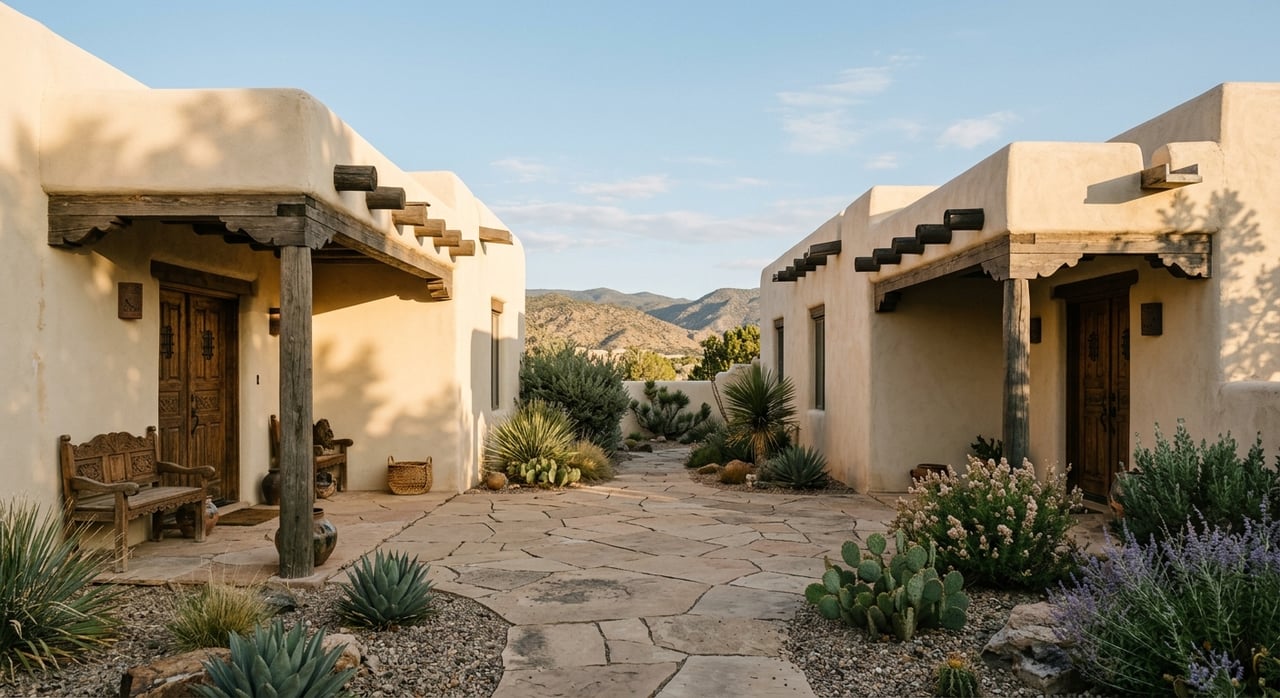


Looking for extra space in Tesuque is rarely just about adding square footage. You may want room for guests, a quiet studio, a detached office, or a flexible building that supports how you actually live on the property. In a place where privacy, access, and land-use rules all matter, understanding the difference between a casita, a studio, and true flex space can help you buy more confidently. Let’s dive in.
Why Tesuque compounds stand out
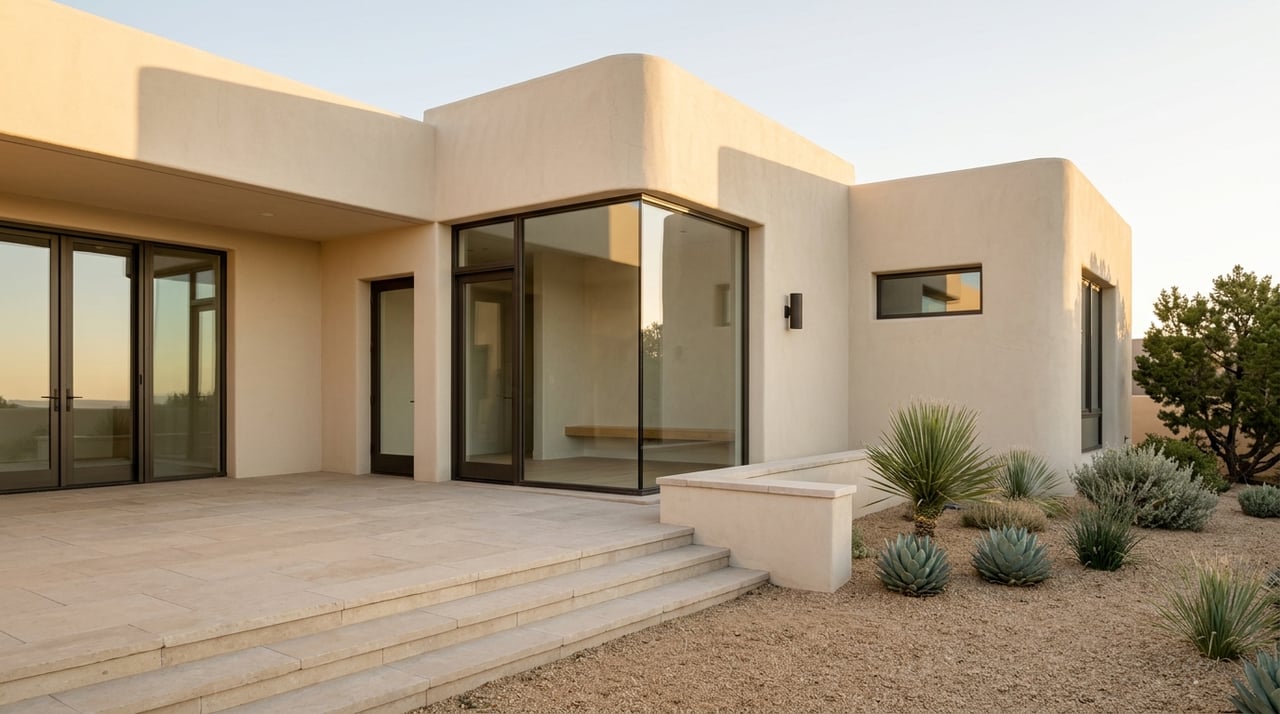
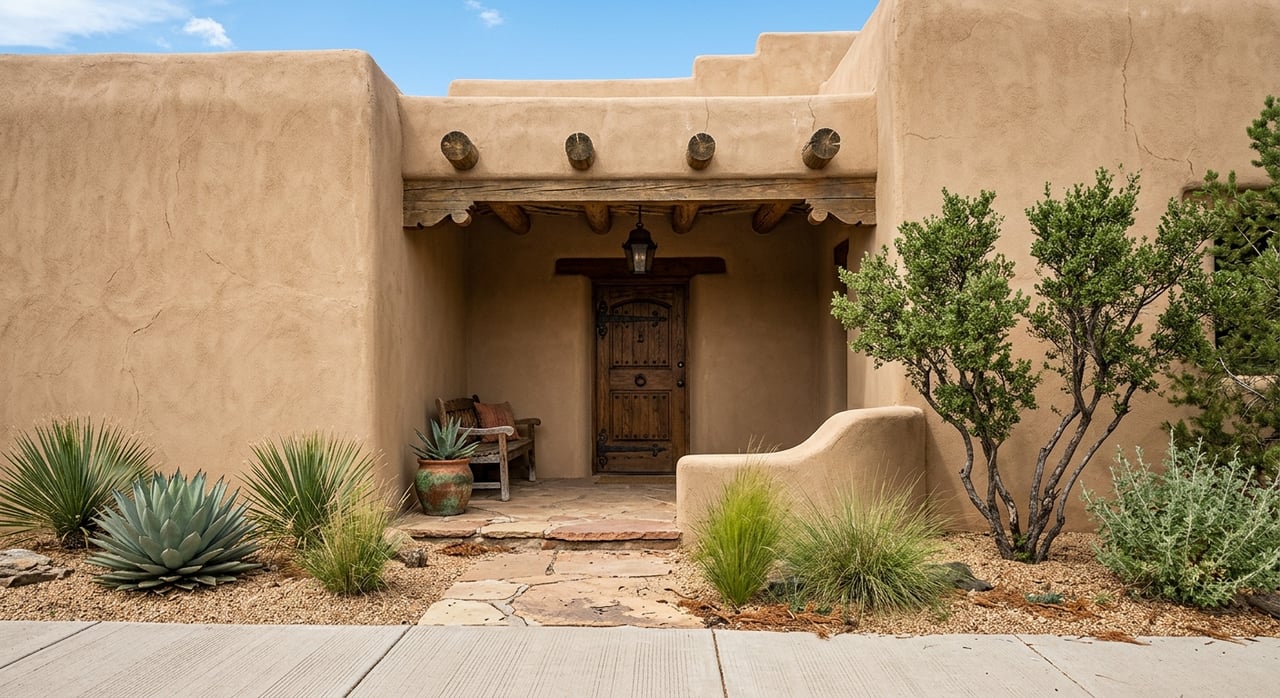
Tesuque has long appealed to buyers who want a property with layers of use, not just a main house and a yard. Santa Fe County’s current Tesuque Community Plan specifically describes the Traditional Community area as supporting compact residential development, including clustered housing, family compounds, and secondary dwelling units.
That matters because compound-style living in Tesuque is shaped by more than aesthetics. The county plan also emphasizes historic and cultural landscapes, acequias, open space, road safety, privacy, dark night sky lighting, drainage, floodplains, and water and wastewater capacity.
For you as a buyer, that means value often comes from how well a property separates public, semi-private, and private zones. A great compound is not only about how many structures sit on the land. It is about whether the site actually works for the way you plan to use it.
What a guest house means in Tesuque
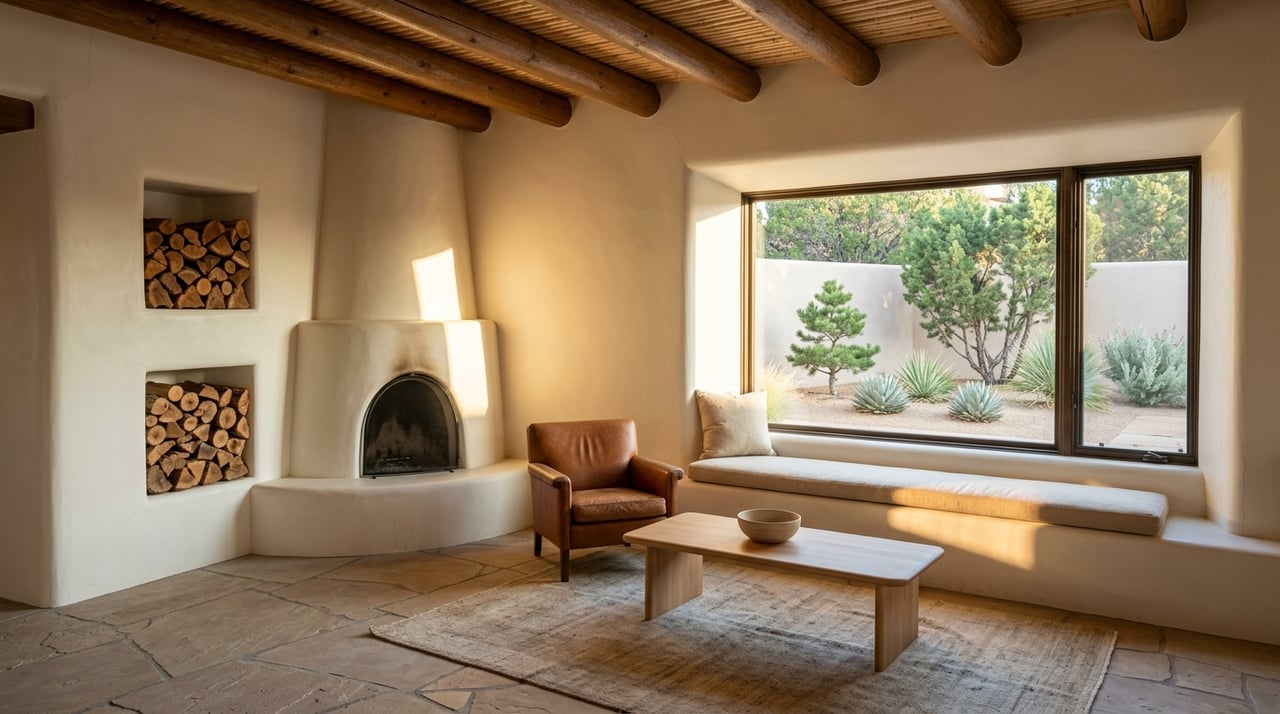
In Santa Fe County, terms like guest house and casita are commonly used to describe an accessory dwelling unit, or ADU. County guidance says an ADU is subordinate to the main residence and may be either attached or detached.
The county also sets clear standards for ADUs. They must share the same architectural style as the principal residence, cannot exceed 50% of the heated area of the main house, must stay under 1,400 square feet, must be no more than one story, and must share a driveway and utilities with the main house.
This is an important distinction when you are comparing listings. A detached building may look like a guest house in marketing photos, but the real question is whether it is legally permitted as a dwelling.
Not every secondary building is a dwelling
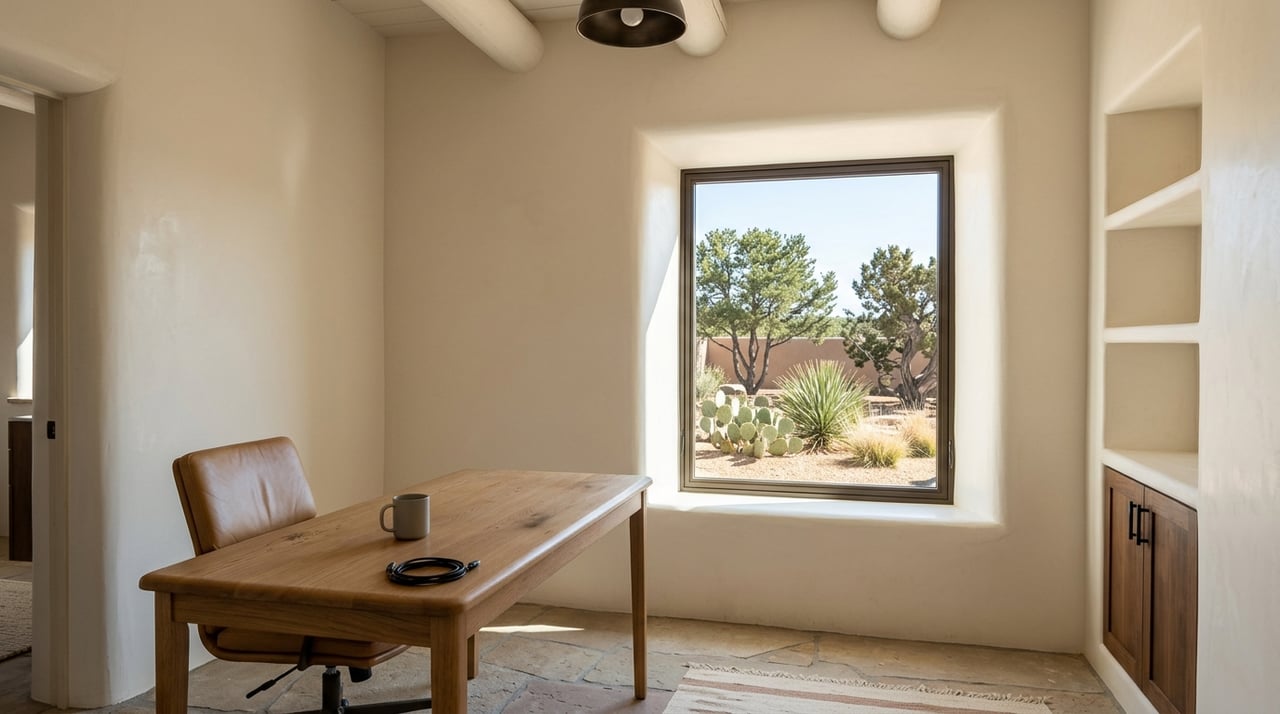
Santa Fe County distinguishes between an ADU and a residential accessory structure. An accessory structure may work well as a studio, workshop, office, or other flexible-use space, but it may not be designed for dwelling purposes and may not contain a full bathroom.
That means a studio can be highly useful without being a legal guest house. If a space starts functioning like independent living quarters, it may need to be reviewed as a dwelling or ADU rather than a simple accessory structure.
How to think about studios and flex space
Studios and flex buildings are often some of the most appealing features in Tesuque properties. They can give you room for creative work, remote work, fitness, hobbies, storage, or overflow space without changing the rhythm of the main residence.
Still, the best way to evaluate flex space is to be specific about your intended use. If you want occasional private workspace, an accessory structure may be enough. If you want regular guest accommodations, staff quarters, or a rentable secondary residence, the structure likely needs to qualify as a legal dwelling.
Questions to ask about flex space
When you tour a compound-style property, it helps to ask:
- Is the detached space legally permitted, and for what use?
- Is it classified as an ADU or as an accessory structure?
- Does it have sleeping, cooking, or sanitation facilities?
- Does the setup match how you plan to use it long term?
- Does the parcel’s zoning and overlay allow that use?
Those questions can save you from buying a property that looks flexible on paper but falls short in practice.
Why zoning and overlays matter in Tesuque
Santa Fe County says guest houses are allowed in many, but not all, parts of the county. The county also notes that zoning districts and community overlays determine whether an ADU is allowed, and community districts may have their own design standards and use tables.
In Tesuque, that review is especially important because the area is shaped by the Tesuque Community District Overlay, updated under Ordinance 2024-04. In other words, Tesuque should be evaluated as its own overlay market, not as a generic rural area north of Santa Fe.
Before you get attached to a property’s second or third structure, confirm the parcel’s zoning district and any applicable community overlay. That step is one of the most important parts of compound due diligence in Tesuque.
Rental potential depends on legal use
For some buyers, a secondary structure is about private use only. For others, it raises the possibility of short-term rental income. In Santa Fe County, that distinction matters.
The county defines a short-term rental as a home, a casita or ADU, or a portion of a home rented for fewer than 30 consecutive days. County guidance says the structure must have been legally permitted as a residence and must include facilities for cooking, sleeping, or sanitation.
Owner-occupied and non-owner-occupied STR rules
Santa Fe County’s current STR program was adopted under Ordinance 2022-07. The county says no one may operate a short-term rental without a Business Registration or Business License.
Owner-occupied STRs are defined as the owner’s primary residence, or an ADU on the same legal lot of record as the primary residence. The county says owner-occupied STRs are not subject to area-based caps.
Non-owner-occupied STRs are treated differently. Depending on the area, the county limits them to 3% or 7% of homes, and a property may be placed on a waiting list if capacity is not available.
The county also says an owner may hold no more than two STR registrations or licenses, and each residence needs its own registration. If rental use is part of your buying strategy, you will want to confirm eligibility early rather than assume a detached building can be licensed later.
Due diligence for Tesuque compounds
Compound-style estates can be wonderful to live in, but they require careful review. In Tesuque, the right questions often have less to do with décor and more to do with legal use, access, utilities, and site planning.
Verify permits for every structure
Santa Fe County says that if a garage, studio, or other structure was converted into a residence without a permit, it is not considered a legal dwelling. The county also notes that pre-1981 structures may be treated as pre-code or legal nonconforming and could need resolution before an STR license is granted.
That makes permit history essential. If a listing includes a casita, studio, office, or workshop, you should verify how each building was approved.
Review subdivision and land-status limits
County ADU materials state that parcels within a major subdivision, or subdivisions approved with conditions prohibiting guest houses, are not eligible for an ADU. The same materials flag the Aamodt Settlement Area, Pueblo or tribal land, shared-well agreements, and water-restriction covenants for separate review.
In practice, this means two visually similar properties may have very different development options. It is worth checking these restrictions before you treat future flexibility as part of the property’s value.
Confirm access, parking, and addressing
Santa Fe County requires a valid E-911 physical address for occupied structures, and owners and occupants must post the assigned number. The county also says roads or driveways serving four or more lots, occupied buildings, or residences must be named.
For occupied or rental-ready secondary spaces, access details matter more than many buyers expect. STR materials also require a site plan showing structures, parking, driveways, and trash storage, while ADU guidance flags road-width and driveway-width standards.
Check water, septic, and fire readiness
County residential guidance says ADUs and additions may require well permits or water utility availability, septic approval, sewer proof, and in some cases additional rainwater or water-harvesting review. That means infrastructure needs to support the use, not just the building envelope.
The county’s STR fire self-certification also requires smoke alarms, carbon monoxide detectors, portable fire extinguishers, clear egress, defensible space, and spark arresters where applicable. These are practical items, but they can affect timing and cost if you plan to activate a guest house for rental use.
Privacy is part of the floor plan
In Tesuque, privacy is often one of the biggest reasons buyers pursue compound-style properties. But privacy is not just about walls or gates.
The Tesuque Community Plan emphasizes privacy, road safety, open space, trails, drainage, and viewsheds. So when you evaluate a compound, it helps to think about where guests park, how people move between structures, what the secondary building overlooks, and how visible it is from the road and the main house.
A well-planned property often feels calm because circulation has been thought through. That kind of layout can make a guest house feel welcoming, a studio feel separate, and the main residence feel protected.
What to focus on when comparing listings
If you are narrowing down Tesuque compounds, keep your attention on the basics that shape long-term usability. A beautiful detached structure has the most value when its legal status and physical setup support your goals.
A simple checklist can help:
- Confirm the zoning district and Tesuque overlay rules
- Verify permits for every building on the parcel
- Determine whether the secondary space is an ADU or an accessory structure
- Review subdivision, water, and land-status restrictions
- Check E-911 addressing, access, parking, and driveway conditions
- Evaluate septic, water, and fire-readiness requirements
- Clarify whether your goal is private use, guest use, or permitted rental use
In Tesuque, the key question is not just how many structures a property has. It is whether each structure is legal, functional, and aligned with how you want to live.
If you are considering a Tesuque compound and want a clear read on guest houses, studios, and flexible-use buildings, Ayden Gramm can help you evaluate the property with both lifestyle fit and due diligence in mind.
FAQs
What is the difference between a guest house and a studio in Tesuque?
- In Santa Fe County, a guest house usually refers to an ADU that is legally permitted as a dwelling, while a studio is often an accessory structure that can be used for work or hobbies but not for dwelling purposes.
Can a Tesuque casita be used as a short-term rental?
- A casita or ADU may qualify as a short-term rental if it was legally permitted as a residence, meets county requirements, and the owner obtains the required Business Registration or Business License.
Are guest houses allowed on every Tesuque property?
- No. Santa Fe County says ADUs are allowed in many, but not all, areas, and the zoning district plus any community overlay determine whether a guest house is allowed.
What size can an ADU be in Santa Fe County?
- County guidance says an ADU must be under 1,400 square feet, no more than one story, and no larger than 50% of the heated area of the main house.
What should you verify before buying a Tesuque compound?
- You should verify zoning and overlay rules, permit history for each structure, subdivision and water restrictions, E-911 addressing, access and parking, and whether the secondary space is a legal dwelling or only an accessory structure.